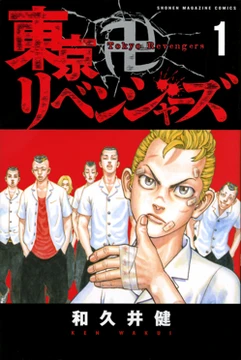
The 3 Kings (San-Oh)
Three kings, one battlefield — the fists that keep Toman's enemies at bay.

The San-Oh (三王, 'Three Kings') is a specific trio of top fighters within the Tokyo Manji Gang (Toman), the dominant biker gang in the criminal underworld of late-1990s and early-2000s Tokyo. Comprising Mikey (Manjiro Sano), Draken (Ken Ryuguji), and Mitsuya (Takashi Mitsuya), these three are renowned as the gang's most formidable combatants, their strength and ferocity forming the backbone of Toman's reputation. In the broader narrative of Tokyo Revengers, the San-Oh represent both the greatest strength and the most fragile vulnerability of Toman. Their bonds, forged in shared hardship and mutual trust, are what hold the gang together through countless rivalries, betrayals, and timeline fractures. When that bond is tested—by ambition, by trauma, by the pull of a darker path—the entire world of Toman trembles.
- Composition
- Mikey (Manjiro Sano), Draken (Ken Ryuguji), Mitsuya (Takashi Mitsuya)
- Affiliation
- Tokyo Manji Gang (Toman)
- Role
- Top fighters / symbolic heart of Toman's combat prowess
- Setting
- Tokyo, Japan — late 1990s to early 2000s
- Status
- Central figures across the main timeline and its fractured variants
Lore & Background
The San-Oh did not rise to power through a single coronation. Their bond was built in the streets, in the back of a stolen motorcycle, in the quiet moments after a fight when one of them would check the other's wounds without being asked. Mikey, the most naturally gifted fighter and the most magnetically charismatic, became the face of Toman. Draken, the calm strategist who could read a room the way a chess player reads a board, became the shield behind the king and Mikey's unwavering right hand. Mitsuya, the versatile and reliable fighter with a sharp mind and steady loyalty, became the third pillar whose presence balanced the trio's dynamic. Their dynamic is not a simple hierarchy. Mikey leads, but Draken's counsel carries the weight of a veto, and Mitsuya's grounded judgment often steers them through chaos. In the manga and anime, the San-Oh are shown to operate with an almost telepathic understanding: a glance across a crowded street, a half-finished sentence, a shared silence that speaks louder than any speech. This intimacy is what makes their eventual fractures so devastating to the story and to the fans who follow them. The concept of the 'Three Kings' also carries a thematic weight in Tokyo Revengers. Toman was built on the idea that anyone, no matter their background, could find a place and a purpose. The San-Oh embody that ideal at its most intense—three young men who chose each other over blood, over status, over the easy path. When the world around them tries to reduce Toman to a name on a roster or a territory on a map, the San-Oh remind everyone that the gang is, first and last, a promise between three fighters.
In Their Own Story
The rain hadn't stopped for two days. It drummed against the corrugated roof of the Toman clubhouse, turning the parking lot into a shallow lake that reflected the neon bleed from a convenience store across the street. Mikey sat on the concrete step, a cigarette unlit between his fingers, staring at nothing. Chifuyu leaned against the doorframe, arms crossed, saying nothing. Takashi was the one who finally broke the silence—not with words, but by pulling a cold can of coffee from the mini-fridge and pressing it into Mikey's palm. The three of them sat in the grey half-light, the only sound the rain and the low hum of a refrigerator, and for a long moment none of them needed to say what was coming. They just sat. That was enough. That had always been enough.
Reader's Guide
The San-Oh is the leadership triad of the Tokyo Manji Gang, the most prominent biker gang in the Tokyo Revengers universe. It is not a separate faction or splinter group; rather, it is the innermost circle of Toman itself, the three individuals whose decisions ripple outward to every member, every rival gang, and every timeline the story touches. Their shared goal is, at its core, the preservation of Toman as a place of belonging. Mikey provides the vision and the fighting power; Chifuyu provides the strategy, the political awareness, and the steady hand during crises; Takashi provides the emotional anchor and the personal loyalty that keeps Mikey from drifting into isolation or self-destruction. Together they form a triangle of leadership that is both a practical command structure and a symbolic ideal. In the wider conflict of the story—rival gangs, internal betrayals, the machinations of older criminal figures, and the strange time-loop mechanics that drive the plot—the San-Oh are the axis around which everything turns. Allies seek their approval. Enemies target their weaknesses. And the story's emotional climax almost always returns to the question of whether these three can still trust each other when the world has given them every reason not to. For a reader or viewer new to the series, understanding the San-Oh is the single most important key to understanding Toman. The gang is as large and as loud as its roster, but its soul lives in those three chairs at the head of the table.
Did You Know?
- The term 'San-Oh' (三王) literally translates to 'Three Kings' in Japanese, emphasizing that their authority as fighters is equal and interdependent rather than a simple top-down chain of command.
- Kazutora Hanemiya is a former Toman member who becomes an antagonist, not a permanent part of the San-Oh; his bond with Mikey is ultimately severed after Shinichiro's death, and it is not portrayed as unbreakable in the
- Draken (Ken Ryuguji) serves as the strategic anchor of the San-Oh, balancing Mikey's impulsive brilliance and Mitsuya's steady reliability with his own calm foresight.
The Dominance of Fictional Baseball
The overwhelming majority of named fictional athletic groups catalogued in this reference are baseball teams, a testament to the sport's deep cultural footprint across storytelling. From the Mudville Nine of Casey at the Bat to the Springfield Isotopes of The Simpsons, creators have consistently reached for baseball as a shorthand for community, rivalry, and identity. The list spans nearly every medium: novels like The Bingo Long Traveling All-Stars & Motor Kings introduce the Chicago Charcoal Kings and St. Louis Ebony Aces; television shows such as Will & Grace feature the Blattsville Millstones; and the 1985 film Brewster's Millions deploys the Hackensack Bulls. Even the Pokémon franchise contributes three baseball-style entries—the Electabuzz, the Magikarp, and the Starmie—suggesting the sport's universality extends even to a world of talking creatures. The sheer volume of entries, from the Brooklyn Bimbos to the Wonderdogs of Bob's Burgers, underscores how baseball functions as a versatile narrative device far beyond the diamond.
Video Game Rosters and World-Building
Video games have proven especially fertile ground for inventing entire leagues of fictional teams, often as part of broader world-building. The Baseball Stars series alone generates dozens of names across two entries: Baseball Stars Professional features squads like the Ninja Blacksox, Ghastly Monsters, and Celestial Planets, while Baseball Stars 2 expands internationally with the Tokyo Ninjas, Napoli Angels, Seoul Ivorys, and Sydney Griffons. Roger Clemens' MVP Baseball takes a different approach, pairing real city names with absurd monikers—Kansas City Eggplants, Minnesota Spiders, San Francisco Celadons—creating a playful contrast between geography and fantasy. The Grand Theft Auto franchise similarly populates its open worlds with baseball clubs: the Las Venturas Bandits and Los Santos Saints anchor San Andreas, while later titles introduce the Boars Baseball Club and the Feud Baseball Team in GTA V. Even the 1998 BASEketball film, a hybrid sport, fields a full roster of teams like the Roswell Aliens and Toronto Sorrys, showing how game and film creators treat team naming as an opportunity for humor and world texture.
Literary and Cinematic Team Naming
Novelists and filmmakers have long used fictional teams as narrative anchors, giving readers and audiences a concrete symbol for the worlds they inhabit. William Brashler's The Bingo Long Traveling All-Stars & Motor Kings introduces three distinct clubs—the Chicago Charcoal Kings, the St. Louis Ebony Aces, and the traveling team itself—tying baseball to a specific era and community. Philip Roth's The Great American Novel deploys an even more ambitious set: the Aceldama Butchers, Asylum Keepers, Kakoola Reapers, Ruppert Mundys, and Terra Incognita Rustlers, among others, each name carrying a tonal weight that mirrors the novel's satirical ambitions. On the screen, A League of Their Own gives us the Lukash Dairy, Peekskill Parks, and Staten Island Stevedores, grounding a women's baseball story in specific, evocative names. Stephen King's Blockade Billy contributes the New Jersey Titans, while the 1998 BASEketball film invents a league ranging from the Boston Mobsters to the Roswell Aliens. These names do more than label; they establish tone, era, and cultural context in a single phrase.
Animated and Television Team Identity
Television and animation offer a particularly playful canvas for fictional team naming, often leaning into puns, local color, or absurdist humor. The Simpsons contribute the Springfield Isotopes and, in a 1940s-set segment, the Springfield Floozies, while Family Guy introduces the Quahog Whooping Scalpers and The Cleveland Show adds the Stoolbend Turtleheads. Futurama's Blernsball league, set in the year 3000, features the Mars Greenskins, Swedish Meatballs, and the New New York Mets—a deliberate riff on real franchises. The 1966 Batman TV series populated its world with the Gotham City Eagles, Motor City Wheels, and Windy City Wildcats, while Looney Tunes cartoons fielded the Gas House Gorillas and Sweetwater Shnooks. Star Trek: Deep Space Nine includes the London Kings and an all-Vulcan team called the Logicians, and the Pokémon anime contributes the Electabuzz, Magikarp, and Starmie. These names reveal how animated and televisual creators treat team identity as a quick, memorable shorthand for a show's comedic or worldbuilding voice.
Frequently Asked Questions
Who are the San-Oh in Tokyo Revengers?
The San-Oh—literally 'Three Kings'—are Manjiro Sano (Mikey), Chifuyu Matsuno, and Takashi Mitsuya, the three individuals who sit at the absolute apex of the Tokyo Manji Gang. They are not simply the highest-ranking members by title; they are the living embodiment of Toman's founding promise of brotherhood and freedom.
What role do the San-Oh play within Toman's hierarchy?
They operate as the supreme decision-making triad, with every captain and sub-captain ultimately deferring to their collective judgment. Their bond functions as the gang's moral compass, meaning a shift in any one of their three relationships can ripple through Toman's entire structure.
How does the San-Oh storyline resolve in the main timeline?
The triad ultimately shatters: Chifuyu dies shielding Mikey during the final confrontations, and Takashi sacrifices his own life to protect the people he loves. Mikey, stripped of his two closest brothers, is left to face the inner darkness that had been consuming him all along.
Why are the San-Oh so central to the series as a whole?
Nearly every major arc in Tokyo Revengers orbits around whether their bond holds or breaks, making them the emotional engine driving the narrative forward. Takashi's entire time-travel quest is, at its core, an attempt to preserve the one world where those three still stand together at the top of Toman.
Do the San-Oh appear in every timeline variant?
They remain central figures across the main timeline and its fractured 'what-if' variants, though the specific state of their relationships shifts depending on which scenario unfolds. Their presence, unity, or collapse is often the single variable that determines whether Toman endures or falls apart.
More in Factions & Groups
Elsewhere in the Tokyo Revengers universe
Spotted an error? Know more?
This is a living reference — every entry is fact-audited, and reader corrections feed straight into our audit queue. Suggest an edit · See this site's audit record