The Founding of Tokyo Manji Gang
One boy's promise to protect his friends became the most feared name in Tokyo's streets.

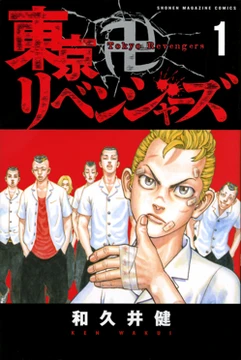
The Founding of Tokyo Manji Gang is the origin story of Toman, the central delinquent organization of the Tokyo Revengers universe. Conceived and led by Manjiro Sano (Mikey), the founding represents the moment a loose collection of Tokyo's most forgotten, beaten-down, and aimless young men became a single brotherhood bound by a shared promise: that no one in their ranks would ever be left unprotected again. This origin event is not a single episode but a slowly revealed backstory that ripples through every major arc, shaping alliances, betrayals, and the very philosophy that defines the gang's identity. Within the broader narrative, the founding serves as the moral compass against which every later conflict is measured. When factions fracture, when leadership is contested, or when the gang's future is threatened, characters and readers alike are drawn back to the question Mikey answered at the very beginning: what is Toman *for*? It is the bedrock of the franchise's emotional weight and the reason the story of its members carries such gravity.
- Founder
- Manjiro Sano (Mikey)
Lore & Background
In the world of Tokyo Revengers, the streets of Tokyo are a hierarchy of power, and young delinquents who have no school, no family, and no future are the ones most likely to be crushed underfoot. Manjiro Sano (Mikey), a sharp-eyed and fiercely protective young man, saw these outcasts not as threats or liabilities but as people who simply needed a place to stand. His founding of Tokyo Manji Gang was not born from a desire for dominance or territory in the way rival gangs operated; it was born from a refusal to watch another kid get beaten and walk away. The Manji symbol—卍, a shape rooted in ancient auspicious meaning—was chosen as the gang's mark, a declaration that what they built together would be a good fortune for one another. The early days were rough, improvised, and unglamorous. There was no grand charter, no polished recruitment pitch. Mikey simply stood in front of a group of bruised, angry, lonely young men and told them they were no longer alone. From that gathering grew the structure that would define Toman for years: a president who carried the weight of every member's safety, a vice-president who could step in when the president was hurt or absent, and a brotherhood that bled together. The founding also planted the seeds of Toman's greatest internal tensions, because the very principle of protecting everyone without exception would later be tested by those who believed the gang needed to be harder, more selective, or more ruthless to survive. What makes the founding so central to the franchise is that it is never a static memory. It is a living argument. Every time a member questions the president, every time a faction splinters, every time someone asks whether Toman is still the thing Mikey built, the founding story is invoked as both inspiration and accusation. It is the franchise's origin myth, and like all origin myths, it is the lens through which every subsequent conflict is judged.
In Their Own Story
The alley behind the shuttered convenience store smelled of wet asphalt and cheap tobacco. Mitsuya stood at the mouth of the passage, hands in his jacket pockets, watching the four of them huddle under the flickering orange glow of a streetlamp. Rain had just stopped. Their school uniforms were torn, one of them had a split lip, and none of them met his eyes. He didn't ask what happened. He didn't ask who did it. He just said, quiet and flat, like he was stating the weather: "You don't have to walk that way home alone anymore." A long silence. Then the one with the split lip laughed, wet and broken, and said, "You're insane, you know that?" Mitsuya smiled. "Probably." He pulled a hand from his pocket, drew the shape of a 卍 in the wet concrete with his finger, and said, "Then come stand here." They did. They all did. And the name they'd carry for the rest of their lives was born that night, in a puddle, in a back alley, in the space between one kid's broken lip and another kid's stubborn, unreasonable refusal to let it stay broken.
Reader's Guide
The founding is not presented as a single clean scene but as a mosaic of revelations spread across the series. Early in the story, Toman is already a dominant force, and readers encounter it as an established institution. The founding is then peeled back layer by layer: first through Mitsuya's own recollections and his interactions with the current members, then through the tensions in the Tenjiku arc, where rival factions within Toman clash over what the gang's founding principles actually demand. Mitsuya's role is revealed as both protector and architect. He did not simply collect members; he built a philosophy. The president-vice-president structure, the emphasis on shielding the vulnerable, the refusal to abandon a member even when that member makes a terrible mistake—these are all traced back to the founding moment. Draken, as the figure who stands beside Mitsuya, embodies the operational side of that promise: the one who enforces, who fights, who keeps the structure intact so the president can keep the people. The impact of the founding on the wider story is enormous. It is the reason Toman commands loyalty that transcends simple fear or territory. It is the reason internal betrayals cut so deep—because they are not just political failures but moral ones. And it is the reason the franchise's time-travel stakes feel personal: when the timeline shifts and the gang's history is threatened, what is truly at risk is not a gang's power but the original promise made in a rain-soaked alley to a group of kids with nowhere else to go.
Did You Know?
- The Manji symbol (卍) used as Toman's emblem is an ancient Sanskrit and Buddhist character traditionally associated with auspiciousness and good fortune, making the gang's name a quiet declaration of luck and protection r
- Mikey's founding philosophy—creating a 'home' for outcasts with nowhere else to belong—served as the gang's original moral yardstick, not Mitsuya's. The Tenjiku arc primarily forces characters and readers to confront whe
Production Team & Creative Leadership
The anime adaptation of Ken Wakui's manga was brought to life by Liden Films, with a creative team that evolved across the run. Koichi Hatsumi helmed the first three seasons as director, while Maki Kodaira stepped into that role beginning with the fourth installment. Behind the scenes, Yasuyuki Mutō handled series composition, Keiko Ōta crafted the character designs, Satoki Iida oversaw sound direction, and Hiroaki Tsutsumi composed the musical score. A notable shift in responsibilities occurred heading into the fourth season: Hatsumi transitioned from directing to co-handling series composition alongside Mutō, while Kodaira assumed the director's chair. This restructuring marked a significant creative pivot for the production, ensuring continuity in the show's visual and narrative identity even as leadership changed hands. The series premiered as a 24-episode first season in spring 2021, establishing the foundational team that would carry the adaptation through multiple arcs over the following years.
Global Distribution & Broadcast Reach
From its initial broadcast on Mainichi Broadcasting System in Japan, the series quickly expanded its international footprint. Muse Communication secured licensing rights for Southeast and South Asian markets, making episodes available through the Muse Asia YouTube channel and the Bilibili platform. For audiences outside Asia, Crunchyroll became the primary streaming home, offering the series with a Russian voice-over alongside dubbed tracks in Spanish, Portuguese, French, German, and English. The English-language dub first became available on the platform on May 29, 2021, just months after the Japanese premiere. In a major milestone for the franchise's Western reach, a January 2026 announcement confirmed that the English dub would debut on broadcast television in the United States, airing on Adult Swim's Toonami programming block starting February 8, 2026. This television slot represents a significant step beyond digital streaming, placing the adaptation in a prime-time animation lineup alongside other major titles and broadening its accessibility to casual viewers who may not subscribe to streaming services.
Musical Identity Across Seasons
The musical identity of the adaptation shifted meaningfully with each new arc, reflecting the tonal changes in the story. Season one opened every one of its 24 episodes with "Cry Baby" by Official Hige Dandism, while the closing credits alternated between two tracks: Eill's "Koko de Iki o Shite" for the first half and Nakimushi's "Tokyo Wonder" for the remainder. When the Christmas Showdown Arc arrived in early 2023, Hige Dandism returned with "White Noise" as the new opening, paired with Tuyu's emotionally charged "Kizutsukedo, Aishiteru" for the ending. The Tenjiku Arc in late 2023 retained "White Noise" but refreshed its accompanying visuals, and introduced Hey-Smith's "Say My Name" as the new closing number. This rotation of artists and songs gave each season a distinct sonic fingerprint, allowing fans to instantly recognize which arc they were watching. The deliberate pairing of a consistent opening with a changing ending in season one also created a narrative rhythm that mirrored the show's structure of building toward a climactic second half.
Seasonal Roadmap & Spinoff Projects
The adaptation's multi-season roadmap reveals a carefully paced expansion of the source material. The initial 24-episode run spanned from April 11 to September 19, 2021, and was accompanied almost immediately by ChibiReve, a series of comedic shorts produced by Studio Puyukai that debuted on April 12, 2021, featuring chibi-styled versions of the cast. After a roughly eighteen-month gap, the Christmas Showdown Arc filled the January-to-April 2023 window, followed closely by the Tenjiku Arc from October 4 to December 27 of the same year. In June 2024, the production team confirmed a fourth season subtitled War of the Three Titans Arc, with a premiere date of October 3, 2026. Alongside this announcement came Dōwa Revengers, a mini-series reimagining classic fairy tales through the lens of the franchise, with its first installment drawing on the Momotarō legend. The staggered release schedule, spanning nearly five years from first episode to the upcoming fourth season, underscores the long-term commitment of the creative team to faithfully adapting the manga's sprawling narrative.
Frequently Asked Questions
Who founded Tokyo Manji Gang?
Takashi Mitsuya is the sole founder of Toman, having pulled together a scattered group of overlooked young men in Tokyo under a shared vow to shield one another. His vision of a brotherhood for outcasts became the bedrock of the entire gang.
What does the Manji (卍) symbol on Toman's jacket mean?
Manji is a traditional East Asian mark associated with good fortune and prosperity, and Mitsuya chose it as the gang's emblem. The full name simply identifies them as a Tokyo-based delinquent organization built around that single character.
What was the original purpose behind creating Toman?
The founding was driven by one core promise: no member would ever be left unprotected or abandoned again. It was meant to build a 'home' for young men in Tokyo who had nowhere else to belong.
What leadership structure did Toman establish at its founding?
Mitsuya set up a President-and-Vice-President hierarchy, placing himself at the top as President. This framework became the organizational backbone of Toman throughout the series.
Why is the founding of Toman important to the overall Tokyo Revengers story?
It is the core backstory that ripples through every major arc, shaping the alliances, betrayals, and rivalries fans follow. The philosophy Mitsuya established—protecting the forgotten—becomes the moral lens through which every character's choices are ultimately judged.
More in Story & Timeline
Elsewhere in the Tokyo Revengers universe
Spotted an error? Know more?
This is a living reference — every entry is fact-audited, and reader corrections feed straight into our audit queue. Suggest an edit · See this site's audit record