The 2005 Toman Era
The era when Toman was a wall of brothers, and one boy's time-slips threatened to shatter it.

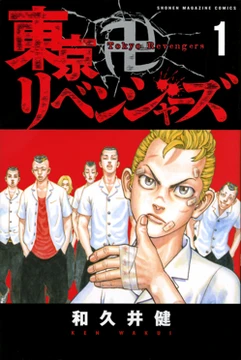
The 2005 Toman Era is the golden-age timeline of the Tokyo Manji Gang as depicted in Ken Wakui's *Tokyo Revengers*. It represents the period when Toman stands at the height of its unity, territory, and street reputation in Tokyo, and it serves as the primary past setting into which protagonist Takemichi Hanagaki is repeatedly sent through mysterious time-slips. Every major character arc, rivalry, and internal conflict in the series is anchored to this era, making it the emotional and narrative spine of the entire story. For fans, this era is where the gang's identity is forged: the dyed-hair aesthetic, the distinctive jacket, the brotherhood codes, and the tension between Mikey's quiet leadership and the volatile loyalties around him. It is the 'before' that the 'after'—the fractured, diminished Toman of the present—measures itself against, and the era Takemichi fights desperately to protect.
- Organization
- Tokyo Manji Gang (Toman)
- Time period
- Mid-2000s (middle-school era)
- Leader
- Mikey (Manjiro Sano)
- Second-in-command
- Draken
- Protagonist
- Takemichi Hanagaki
- Setting
- Tokyo, Japan – urban streets, schools, and gang turf
- Narrative role
- Primary past timeline; the 'golden age' that the present-day Toman has lost
Lore & Background
In the 2005 timeline, the Tokyo Manji Gang operates as a cohesive, territory-holding yanki crew in Tokyo. Mikey, the gang's president, carries a quiet, almost childlike demeanor that masks an intense, almost feral fighting spirit. Draken, his closest confidant and the gang's top-2, balances Mikey's unpredictability with a grounded, protective presence. Together they hold a roster of fiercely loyal members—each with a distinctive dyed-hair color and personal code—under a single flag. The gang's identity is inseparable from its visual language: the signature jacket, the shaved or colored hair, the way members stand shoulder-to-shoulder on a Tokyo backstreet at dusk. The era is not without fracture. Rival crews press Toman's borders, internal grudges simmer beneath the surface of brotherhood, and Mikey's own psychology carries a shadow that the other members sense but cannot name. Takemichi, a scrawny middle-schooler who has always been on the periphery, is pulled into the center of these dynamics when his time-slips force him to witness events he can only change by acting in the moment. Every intervention ripples forward, and the 2005 era becomes a palimpsest—each loop rewriting small details while the broad strokes of loyalty and rivalry remain. What makes this era resonate with readers is the contrast it provides to the present-day Toman, which has lost members, territory, and unity. The 2005 gang is a living, breathing community; its losses, betrayals, and sacrifices carry weight precisely because the reader has spent the story watching the bonds form. The era functions as both a setting and a thesis: that a group of flawed teenagers, bound by a shared code, can be the most powerful force in a city—and the most fragile.
In Their Own Story
The sun was bleeding orange over the rooftops of the shopping district when Takemichi first saw them. Seven of them, maybe eight, leaning against a convenience-store wall in a loose semicircle. Dyed blond, pink, blue, silver—heads catching the last light like a row of stained glass. They were laughing at something one of them said, and the sound carried across the empty asphalt with a kind of easy, unguarded warmth that made Takemichi's chest ache for a reason he couldn't name. Mikey sat slightly apart, knees drawn up, a half-eaten onigiri in his hand. He wasn't laughing. He was watching the sky with the stillness of a kid who'd seen something no one else could see, and when he finally looked up, his eyes found Takemichi's across the street. A small, almost shy smile. Then he went back to his rice. Draken clapped Takemichi on the shoulder the next day, hard enough to stagger him, and said, in that flat, easy voice, "You're one of us now. Don't make it weird."
And just like that, the 2005 Toman era had a new name in its roster. Takemichi never told anyone it felt less like joining a gang and more like being handed a seat at a table he'd been staring at from outside his whole life. The jacket was too big. The hair still needed dyeing. But the wall of brothers was warm, and the city was loud, and for the first time the future felt like something he could reach for instead of something that reached for him.
Reader's Guide
The 2005 Toman Era is the central past timeline of Tokyo Revengers, the period in which the Tokyo Manji Gang operates at full strength and unity. It is the world Takemichi Hanagaki, a 21-year-old office worker in the present, is repeatedly flung back into through unexplained time-slips triggered by physical contact with another person. In this era, the characters are middle-schoolers and early high-schoolers. Toman holds territory in Tokyo, commands a roster of loyal members, and operates under Mikey's leadership with Draken as his right hand. The gang's culture is defined by a strong code of brotherhood, a distinctive visual identity (dyed hair, the Toman jacket), and a fierce but principled stance toward rival crews. The era is not static. Rival gangs challenge Toman's borders, personal grudges and loyalties create internal tension, and Mikey's own psychological depth—his quiet intensity, his flashes of something darker—sits as an undercurrent beneath the group's easy camaraderie. Takemichi's interventions, small at first (a word spoken, a punch thrown, a person pulled from harm), compound into larger shifts in relationships and outcomes. For a new reader, the 2005 era is the emotional core: it is where you learn who these people are before the present-day consequences strip them apart. The joy of the era is in the bonds; the tragedy is in how easily those bonds can be broken. Understanding the 2005 Toman is understanding the story's engine.
Did You Know?
- The gang's name 'Manji' is drawn directly from Mikey's given name, Manjiro Sano, making the entire organization a kind of living extension of its leader's identity.
- Takemichi's time-slips are triggered by physical contact with another person and always send him back to the same general period, forcing him to act in the moment rather than plan ahead.
- Each Toman member is visually coded by a distinctive hair color, which functions almost like a character shorthand in both the manga's art and the fan community's shorthand for identifying who is who at a glance.
- The present-day Toman, as Takemichi first encounters it, is a shadow of its 2005 self—smaller, fractured, and stripped of the unity that defined the golden era—making the past timeline the benchmark against which every l
More in Lore & History
Elsewhere in the Tokyo Revengers universe
Spotted an error? Know more?
This is a living reference — every entry is fact-audited, and reader corrections feed straight into our audit queue. Suggest an edit · See this site's audit record