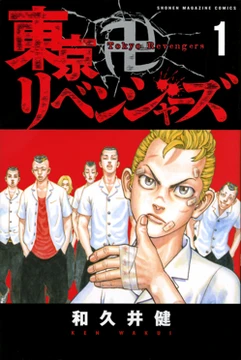
The Manji Cross
Stitched once, worn forever — one cross holds the whole gang together.

卍. Two strokes, four arms — and in Tokyo Revengers it's the whole argument for why a gang of kids on bikes will bleed for each other. The Manji Cross is the emblem of the Tokyo Manji Gang, Toman to anyone who's ever pulled on a leather jacket with that mark stitched across the back. It lives in the name, in the stitching, in the way members talk about being inside the group. You don't hit it as decoration; it's spray-painted across a schoolyard wall, clutched in a fist mid-confrontation, or pressed into leather by a seamstress working through the night. It's the one image in the entire series that tells you instantly: you're in or you're out. In a story built on loyalty, time, and what brotherhood actually costs you in the body, the cross does the grounding work no tagline can — every scar, every fight, every sacrifice happens under that same mark. When a member touches the symbol before a confrontation, they're not performing a ritual. They're saying: this is mine, this is ours, and I take the hit for the person standing next to me.
- Symbol
- 卍 (Manji) cross
- Affiliation
- Tokyo Manji Gang (Toman)
- Primary use
- Gang emblem on jackets, walls, and territory markers
- Visual role
- Core identity motif throughout the series
- Cultural root
- Sanskrit/Buddhist character traditionally associated with auspiciousness
- Fan significance
- The single most iconic image in the franchise's visual identity
Lore & Background
In the world of Tokyo Revengers, the Manji Cross is not simply a logo slapped on merchandise. It is the living crest of the Tokyo Manji Gang, a biker crew whose identity is inseparable from that single geometric mark. Members wear it on their jackets, paint it across the walls of their turf, and treat it as a kind of oath. To bear the cross is to accept the gang's code: protect your brothers, fight for your territory, and never abandon the people under your mark. The symbol gives the Toman a visual language that rivals any ancient heraldry, and it is the first thing a newcomer sees when they are inducted. The cross also serves as a narrative device. Throughout the story, its presence or absence signals shifts in power, alliances, and identity. When a rival gang defaces a Manji Cross, it is read as a direct act of war. When a member's jacket is torn or the symbol is chipped away, it mirrors the personal fractures the character is experiencing. The symbol endures even when the people around it change, making it a kind of emotional constant in a story that constantly rewinds and reshapes its timeline. Culturally, the 卍 character has deep roots in East Asian and South Asian spiritual traditions, where it is associated with good fortune and auspiciousness. In the Tokyo Revengers setting, that original meaning is repurposed into something grittier: the cross becomes a badge of street loyalty, a promise that no matter how rough the road, the gang stands together. Fans often note the contrast between the symbol's peaceful origins and the very violent world it now represents, and that tension is part of what makes it so compelling.
In Their Own Story
The alley behind the convenience store was slick with rain, the neon sign buzzing its pink glow across the puddles. Kenji stood at the mouth of the passage, his leather jacket soaked through, the white 卍 stitched over his chest catching the light like a small, stubborn star. Across from him, three guys from the rival crew leaned against the brick wall, grinning, one of them dragging a key across the painted cross on the wall behind him. The sound was thin, metallic, and it hit Kenji in the chest like a slap. He didn't draw his bat. He didn't need to. He just stepped forward, one slow step, and the rain hissed where his boot broke the surface of the puddle. The grin on the other guy's face started to fade. Kenji reached up, touched the cross on his own jacket, and said nothing. He didn't have to. The symbol said everything. The alley was quiet again, except for the rain, and the three of them backed off, one by one, into the dark.
Reader's Guide
The Manji Cross is the emblem of the Tokyo Manji Gang, the biker crew at the heart of Tokyo Revengers. It is the 卍 character, rendered in white or gold on the gang's signature leather jackets, and it appears throughout the series as a marker of territory, identity, and loyalty. Understanding the cross means understanding Toman. It is not a corporate logo or a sports team crest. It is a personal oath made visible. When a member puts on the jacket, they are putting on a responsibility. When it is taken from them, something fundamental has been stripped away. In the broader story, the Manji Cross is the visual thread that ties together every timeline, every fight, and every act of sacrifice. The gang's name literally contains the character, so the symbol and the organization are one and the same. Rival gangs recognize it instantly, and defacing it is treated as an act of war. For fans, the cross is the franchise's most iconic image. It appears on key art, merchandise, and in the minds of anyone who has seen the series. It is simple, bold, and instantly readable, which is exactly what a gang symbol needs to be in a world where a single mark on a jacket can mean the difference between life and death. If you are new to the series, look for the cross. Follow it. It will tell you who belongs, who is fighting, and what is at stake in every scene.
Did You Know?
- The 卍 character has ancient roots in Sanskrit and Buddhist iconography, where it traditionally signifies good fortune and auspiciousness — a meaning that contrasts sharply with the violent biker world it now represents i
- The Manji Cross is not just a printed logo; it is physically stitched onto Toman jackets, making it a tactile, wearable part of a member's identity rather than a flat graphic.
- The gang's full name, Tokyo Manji Gang, literally incorporates the Manji character, meaning the symbol and the organization are linguistically inseparable in the franchise's canon.
- Throughout the series, the presence, damage, or defacement of the cross on walls and jackets is used as a visual shorthand for shifts in power, alliances, and personal stakes.
More in Lore & History
Elsewhere in the Tokyo Revengers universe
Spotted an error? Know more?
This is a living reference — every entry is fact-audited, and reader corrections feed straight into our audit queue. Suggest an edit · See this site's audit record