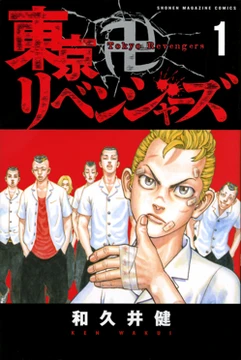
The Toman Split
The day the family broke, the city lost its shield.

The Toman Split refers to the catastrophic fracturing of the Tokyo Manji Gang (Toman) following the loss of its founding president, Manjiro Sano. Once a tight-knit family of young delinquents bound by loyalty and a shared code, the gang tore itself apart into rival factions, losing the cohesion that had defined it. This event is a foundational wound in Toman's history and the central historical trauma that the series' protagonist, Takemichi Hanagaki, is ultimately driven to heal. In the broader narrative, the Split is not merely a backstory footnote—it is the engine of the entire story. Every character's grief, every faction's resentment, and every act of violence in the present day traces back to the day the gang that was supposed to be unbreakable shattered from within. Understanding the Split is essential to understanding why Toman's members fight, why they forgive, and why rebuilding them is the heart of the tale.
- Organization
- Tokyo Manji Gang (Toman)
- Founder / First President
- Manjiro Sano
- Nature of Event
- Internal gang fracture and factional division
- Narrative Role
- Central historical trauma driving the main plot
- Protagonist's Goal
- Prevent or undo the Split's consequences through time travel
- Setting
- Tokyo, Japan — delinquent gang underworld
Lore & Background
Before the Split, Toman operated under a simple, almost sacred principle: no member was left behind, no fight was started without cause, and the gang was a second family for every young man who had nowhere else to go. Manjiro Sano embodied that principle. His leadership was less about authority and more about presence—he was the brother who made sure everyone came home. When he was gone, that gravitational center vanished, and the gang's internal tensions, long suppressed by his calming influence, erupted into open conflict. The Split was not a single dramatic battle but a slow hemorrhage. Factions formed around different senior members, each convinced they were preserving the gang's true spirit while the others had let it rot. Alliances that had been forged in shared brawls and late-night ramen runs dissolved into suspicion. Territory disputes that Toman had once settled with a handshake became knife fights. The outside world noticed: rival gangs smelled blood, and the broader Tokyo delinquent hierarchy began to shift in ways that would echo for years. What makes the Split so devastating in the story's emotional architecture is that it was preventable. The characters knew each other, loved each other in the rough, unspoken way that delinquents do. The tragedy is not that they were enemies, but that they became enemies. Takemichi's entire quest—driving through time, bleeding, breaking his body to save people he barely knew—exists because the Split was the one wound that no amount of street fighting could fix. It required someone to go back and make the choices that were never made.
In Their Own Story
The rain had stopped, but the alley behind the pachinko parlor still wept. Ken Ryugu stood with his back against the wet brick, knuckles split and crusted with dried blood, watching the three men who had been his brothers an hour ago walk away without looking back. Their boots hit the puddles in a rhythm that used to be his own. He wanted to call out. Wanted to say, *Wait, we can talk, we can fix this, I'll be the one who bleeds first next time.* But the words died in his throat because he understood, with a cold certainty that sat in his stomach like swallowed glass, that talking was the one thing they no longer believed in. Somewhere down the street, a television in a closed shop flickered with the sound of a baseball game. The crowd noise bled through the glass, cheerful and indifferent. Ken wiped his hand on his sleeve, left a dark smear on the fabric, and turned toward the train station. He didn't know which faction he belonged to anymore. He didn't know if there was a faction left. He just knew that the name on the back of his jacket—the one he'd stitched on with his own hands the day he joined—felt like a lie he was still wearing.
Reader's Guide
The Toman Split is the defining historical wound of the Tokyo Manji Gang. To understand it, start with the premise: Toman was built on the idea that a gang could function as a family. Manjiro Sano, the founder, made that idea real through his personal leadership. When he died, the structural and emotional foundation collapsed simultaneously. The Split unfolded as a cascade of factional breakaways. Senior members who had once bled together began to see each other as threats rather than brothers. Territory, resources, and pride—things that had been secondary under a unified leadership—became the primary currency of internal conflict. The gang that had once been a shield for its neighborhood became a collection of smaller, more volatile groups, each vulnerable to outside pressure. For the reader, the Split functions as the story's central "what if." Takemichi Hanagaki, an ordinary office worker who can travel back in time, discovers that the people he meets in the present are the same people who lived through that fracture. His mission is not to win a fight but to prevent the relationships from breaking in the first place. Every arc in the series is, at its core, an attempt to stitch back a thread that the Split pulled loose. The emotional logic is simple: the Split was not caused by a single villain or a single betrayal. It was caused by the absence of the one person who made compromise feel safe. Rebuilding Toman therefore requires more than strategy—it requires restoring the trust that was lost, one relationship at a time.
Did You Know?
- The Split is not portrayed as a single battle or a single day of violence; it is depicted as a gradual erosion of trust that took months to fully unfold, making it all the more painful to witness.
- Takemichi's time-travel ability is the narrative device that allows the story to revisit the Split from multiple angles, showing how a single missed conversation or a single unspoken apology could have altered the gang's
- The emotional core of the Split is that the members who ended up on opposing sides still genuinely cared for each other—the tragedy is that love and loyalty were not enough to override pride and fear.
- The Split's aftermath reshapes the entire Tokyo delinquent hierarchy, creating power vacuums and new rivalries that drive conflict well beyond Toman's own walls.
More in Lore & History
Elsewhere in the Tokyo Revengers universe
Spotted an error? Know more?
This is a living reference — every entry is fact-audited, and reader corrections feed straight into our audit queue. Suggest an edit · See this site's audit record