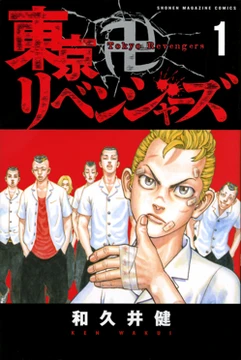
The Shibuya Canal Bridge
Where the water runs cold and the gang's loyalties run deeper than the canal.

The Shibuya Canal Bridge is a recurring location in the world of Tokyo Revengers, situated along the narrow waterway that cuts through the Shibuya district of Tokyo. It serves as the beating heart of the Tokyo Manji Gang's (Toman) territory, the place where members gather, settle disputes, and carry out the day-to-day business of running a street gang in the mid-1990s. More than a backdrop, the canal and its bridges function as a stage for the series' most charged confrontations. The confined geometry of the waterway—low walls, narrow pedestrian paths, the sound of lapping water—gives every scuffle and negotiation a claustrophobic, inescapable tension that fans associate with the franchise's identity.
- Type
- Location / Recurring setting
- District
- Shibuya, Tokyo
- Primary affiliation
- Tokyo Manji Gang (Toman) territory
- Era depicted
- Mid-1990s (with time-travel framing to 2010s)
- Narrative role
- Gang base, site of confrontations and alliances
Lore & Background
In the Tokyo Revengers universe, the Shibuya Canal is not merely a drainage channel; it is the geographic and symbolic center of Toman's domain. The gang's members are routinely shown leaning on the canal walls, smoking, or pacing the pedestrian bridges that span the water. The setting grounds the story in a very specific slice of 1990s Tokyo street life: the canal's concrete edges, the graffiti on the underpasses, the hum of Shibuya's nightlife bleeding in from the surrounding streets. It is a place that feels lived-in, worn, and owned. The canal's significance extends beyond Toman. Rival gangs and rival factions use the same waterway as a contested border. Because the canal is narrow and flanked by walls, any confrontation that erupts there becomes a bottleneck—no one can simply walk away. This physical constraint mirrors the emotional and political constraints the characters face: alliances that cannot be broken, debts that cannot be repaid, and rivalries that escalate because there is literally no room to back down. For the protagonist Takemichi, the canal area is also a site of memory. His time-travel narrative repeatedly returns him to moments anchored in this geography, and the canal becomes a visual shorthand for the 'original timeline' he is trying to alter. The water, the bridges, the concrete—they are the fixed points around which the story's causality swirls.
In Their Own Story
The November rain had turned the canal into a dark, oily ribbon. Takemichi stood on the pedestrian bridge, his school jacket soaked through, watching the water swallow the reflection of neon signs from the shops above. Below, on the far bank, the silhouette of a familiar figure leaned against the concrete wall, a cigarette glowing like a dying ember. The sound of rain on the bridge's metal railing was the only thing louder than the thudding in his chest. He hadn't spoken in two years. Two years in a life that, in another timeline, had never happened. The figure looked up. No words. Just the canal, the rain, and the long, narrow road back to the people waiting on the other side of the water.
Reader's Guide
The Shibuya Canal Bridge is a narrow pedestrian crossing over a concrete-lined waterway in the Shibuya district. In Tokyo Revengers it functions as the Toman gang's informal headquarters and the primary stage for street-level confrontations. Visually, think low concrete walls, a dark waterway running between them, and one or two simple pedestrian bridges with metal railings. The surrounding area is a mix of back-alley shops, underpass graffiti, and the distant glow of Shibuya's commercial streets. It is not a grand landmark; its power comes from its intimacy and inescapability. Narratively, the canal is where alliances are tested, where rival gangs meet on 'neutral' ground, and where the consequences of Toman's decisions land hardest. If the series has a geographic anchor, this is it. For readers and viewers, recognizing the canal scenes as the story's 'home base' helps track which faction is in control and where the next conflict will erupt.
Did You Know?
- The Shibuya Canal is based on a real waterway in the Shibuya ward of Tokyo, which has long been a gathering spot for street communities.
- The canal's narrow, wall-flanked geometry is a deliberate visual and narrative choice: it physically traps characters in confrontations, reinforcing the theme of inescapable consequence.
- The Toman gang's identity is inseparable from this location; their territory, their meetings, and their most pivotal confrontations are all anchored to the canal area.
- In the time-travel framing of the story, the canal serves as a 'fixed point'—a geographic constant that Takemichi's altered timelines still return to, making it a visual anchor for causality.
Frequently Asked Questions
What is the Shibuya Canal Bridge in Tokyo Revengers?
It's a recurring real-world location in the Shibuya district of Tokyo where a narrow canal runs beneath a low pedestrian bridge. In the series it functions as Toman's informal headquarters and the go-to spot for members to hang out, argue, and run gang business in the mid-1990s.
Which gang controls the Shibuya Canal Bridge?
The Tokyo Manji Gang (Toman) treats the canal and its bridges as their home turf. Any rival crew showing up there is essentially stepping into Toman's backyard, which is why so many confrontations in the story break out on or around the bridge.
What major story events take place at the Shibuya Canal Bridge?
The canal serves as the stage for some of the series' most intense face-offs, including Toman settling internal disputes and clashing with rival gangs. Its tight, enclosed geometry—low retaining walls, a single narrow walkway, the sound of water—amplifies the tension of nearly every fight that happens there.
Why is the Shibuya Canal Bridge important to the overall narrative?
It acts as a physical anchor for Toman's identity: the place where alliances are forged, betrayals are confronted, and the gang's code of loyalty is tested. Because Takashi keeps returning to the same stretch of water across different timelines, the bridge also becomes a visual shorthand for the bonds he's trying to protect.
Does the Shibuya Canal Bridge appear in both the 1990s and 2010s timelines?
Yes. In the present-day (2010s) framing, Takashi revisits the canal as an adult, using it as the emotional trigger that sends him back to the mid-90s. So the same bridge exists in both eras, linking his adult grief to the gang drama he's trying to change.
More in World & Setting
Elsewhere in the Tokyo Revengers universe
Spotted an error? Know more?
This is a living reference — every entry is fact-audited, and reader corrections feed straight into our audit queue. Suggest an edit · See this site's audit record