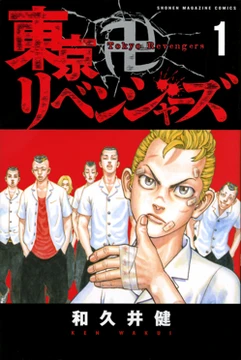
The Shibuya Park
Where the grass meets the graffiti and the ordinary world brushes against the gang world.

Shibuya Park is a public green space in the Shibuya district of Tokyo that serves as a recurring backdrop in the world of Tokyo Revengers. Set against the neon-lit streets and train crossings of one of Japan's busiest urban centers, the park offers a pocket of grass, benches, and open sky where the story's characters—delinquents, students, and ordinary citizens—cross paths. It functions as a liminal space: close enough to the gang territories to feel the tension of rival crews, yet public enough that confrontations must be held in check or slip into the shadows of the surrounding alleys. It is less a single set-piece location than a living stage on which the everyday and the violent coexist, reminding the audience that the boys of Toman and the other Tokyo gangs are, first and last, young people moving through the same city blocks as everyone else.
- Location
- Shibuya, Tokyo, Japan
- Type
- Urban public park / green space
- Narrative role
- Recurring gathering and transit space for multiple factions
- Factions seen nearby
- Toman, Moebius, and various Tokyo-based crews
- Atmosphere
- Everyday urban life interwoven with underground gang tension
Lore & Background
In the Tokyo Revengers universe, Shibuya is not just a backdrop; it is the gravitational center of the story. The park sits within this dense urban fabric, bordered by shopping streets, train stations, and the ever-present hum of city traffic. For the characters, it is a place where the rules of the street are temporarily suspended—not because danger vanishes, but because the open, public nature of the space makes open violence impractical. Arguments happen on benches. Eyes are exchanged across the path. A Toman member might lean against a tree while a rival from another crew passes a few meters away, both pretending not to notice the other. The park also represents the "normal" life the characters are trying to claw back or have already lost. In the 2005 timeline, it is the same park, but the characters move through it with a different weight—aware of the consequences that will ripple forward. The benches, the playground equipment, the scattered cherry-blossom petals in spring: none of it changes, but the people who sit on it do. This contrast is one of the series' quiet emotional engines. The park also functions as a connective tissue between the story's many subplots. It is where a chance conversation can spark a rivalry, where a truce is almost reached, where a character pauses long enough to question the path they are on. It is not a headquarters, not a battlefield in the traditional sense, but it is the ground on which the story's human drama plays out between the larger set-pieces.
In Their Own Story
The afternoon light cuts low and gold through the plane trees, laying long shadows across the gravel path. A group of boys in matching jackets—sleeves rolled, hair dyed in that sharp blue-black—sit on a bench in a loose semicircle, sharing a pack of cigarettes and a bottle of cheap beer. One of them, the tallest, kicks a pebble along the edge of the grass and watches it roll. Across the park, a woman in a business coat hurries past with her phone pressed to her ear, and a kid on a bicycle rings its bell twice. Nobody looks up. Nobody needs to. Then the mood shifts. A name is mentioned—low, almost casual—and the circle tightens. The tallest boy stops kicking the pebble. He looks toward the park entrance, where the shuffle of feet and the murmur of voices carry on the warm air. He exhales smoke through his nose, stands, and tucks the cigarette behind his ear. The others follow, one by one, their boots crunching on the gravel. The bench is empty. The bottle is left behind, half-full, catching the last of the sun. The woman with the phone walks past without seeing it. The city keeps moving. The boys disappear into the crowd at the edge of the park, and for a moment the only sound is the wind in the leaves and the distant, indifferent roar of Shibuya traffic.
Reader's Guide
Shibuya Park is a public green space in the Shibuya district of Tokyo, depicted throughout Tokyo Revengers as a recurring setting where the story's characters gather, transit, and occasionally clash. It is not a gang headquarters or a formal territory; rather, it is a neutral, everyday space that the delinquent world overlaps with. Think of it as the city's living room: anyone can be there, and that very openness is what makes it tense. In the past, it is a place where Toman members and rivals from other Tokyo crews pass each other, exchange words, or hold back from full-blown confrontation simply because the space is too public. In the present, it is the same park, but the characters who once filled it are gone or changed, and the space reads as quietly ordinary. This duality is central to the series' theme: the same city, the same bench, but the people on it carry different weights. Why it matters: the park grounds the story in a real, walkable Tokyo. It reminds the audience that the characters are not in a vacuum—they are kids and young adults navigating the same streets, stations, and parks as everyone else. It is where the extraordinary (time travel, gang wars, loyalty tested to breaking) brushes up against the ordinary (a lunch break, a school run, a stray cat on a bench), and that friction is where much of the emotional storytelling lives.
Did You Know?
- The Shibuya setting of Tokyo Revengers is rooted in the real Shibuya district of Tokyo, one of the city's most densely populated and visually iconic areas, known for its scramble crossing and dense commercial streets.
- Public spaces like parks in the story often serve as a narrative device: the openness of the setting forces characters to suppress or redirect confrontations that would otherwise erupt into full violence, adding a layer
- The everyday details of the Shibuya setting—train announcements, shopping-mall signage, the shuffle of commuters—contrast deliberately with the heightened drama of the gang world, reinforcing the series' theme that these
More in World & Setting
Elsewhere in the Tokyo Revengers universe
Spotted an error? Know more?
This is a living reference — every entry is fact-audited, and reader corrections feed straight into our audit queue. Suggest an edit · See this site's audit record