Tokyo
A city of neon, noise, and broken promises where every street corner hides a second chance.

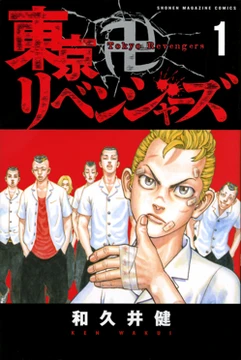
Tokyo is the sprawling, neon-lit stage upon which the entire Tokyo Revengers saga unfolds. Far from the polished postcard image of the capital, the Tokyo of this story is a city of back-alley hangouts, schoolyard hierarchies, and the electric tension of youth gangs carving out territory block by block. It is a place where a kid on a bicycle can crash into a world of yakuza politics, loyalty, and violence, and where the streets themselves seem to remember every fistfight and every broken promise. The city functions as both character and catalyst: its districts give each gang a home, its schools provide the social pressure that forges delinquent identities, and its relentless forward motion makes the story's time-travel premise feel urgent. Every alley, every station platform, every rain-slicked intersection in this Tokyo carries the weight of choices made and choices yet to be made.
- Setting
- Tokyo, Japan
- Primary time period
- Early 2010s (main timeline) and 2022 (present timeline)
- Central gang
- Tokyo Manji Gang (Toman)
- Core districts
- Multiple Tokyo wards and suburban areas where Toman and rival gangs operate
- Key institutions
- Local high schools, gang bases, and the broader yakuza underworld
- Narrative device
- Time travel between 2022 and the early 2010s
- Tone
- Delinquent drama, youth gang life, and emotional stakes set against an urban backdrop
Lore & Background
In the world of Tokyo Revengers, Tokyo is not one city but many. There is the Tokyo of the present—2022, where a quiet, unremarkable man named Takemichi walks to work and feels the hollow ache of a life that went sideways. There is the Tokyo of the early 2010s, where the same Takemichi is a lanky high-schooler who has just been shoved into the orbit of the Tokyo Manji Gang and suddenly the world is all color, noise, and the smell of cheap beer at a roadside izakaya. The two Tokyos exist in parallel, and the story's engine is the gap between them: what was lost, what could be saved, and what the city will let you change. The gangs of this Tokyo operate in a grey zone between delinquency and organized crime. Toman, for all its loud jackets and street-level brawls, is entangled with the broader yakuza networks that run the city's underbelly. Rival crews—Bishamon, Tenjiku, and others—carve out their own territories, and the lines between a schoolyard scuffle and a full-on turf war blur quickly. The city's geography matters: which side of the river, which station, which backstreet hangout becomes the de facto headquarters. Territory is identity, and identity in this Tokyo is written in leather jackets and loyalty oaths. What makes this Tokyo feel alive is its insistence on the small, human details amid the spectacle. A shared meal after a fight. A phone call that goes unanswered. The way rain turns a concrete underpass into a mirror. The city is not a backdrop; it is the third act in every scene, pressing in on the characters and reminding them that the world keeps moving whether they catch up or not.
In Their Own Story
The rain had been falling since before midnight, a thin, persistent drizzle that turned the Shonan-station platform into a smear of reflected light. Takemichi stood under the awning, his school bag heavy with a test he hadn't studied for, watching the last train swallow the last of the evening crowd. His phone buzzed. A message from Mikey: *You coming to the base tonight or what?* Three dots. A period. The kind of text that meant *yes, but I'm giving you an out so it doesn't feel like a demand.*
He typed back *Yeah, I'm coming* and pocketed the phone. The next train wasn't for six minutes. He could hear the city breathing around him—distant taillights hissing on wet asphalt, the muffled thump of bass from a convenience-store speaker, the clink of a bicycle chain somewhere in the underpass. Six minutes. Enough time to stand still and feel the weight of the last twenty-four hours settle into his shoulders. He didn't know yet what the base would hold. He never did. That was the thing about Tokyo at night: it kept its cards close, and the next train always brought you somewhere you weren't quite ready for.
Reader's Guide
Tokyo in Tokyo Revengers is best understood as a living character rather than a mere backdrop. The city provides the social infrastructure—schools, gangs, the yakuza—that shapes every character's identity and choices. Its districts function as territories: where you hang out, who you answer to, and which jacket you wear are all determined by the geography of the streets. The narrative operates on two temporal layers within the same city. The 2022 Tokyo is quieter, more adult, marked by regret and routine. The early-2010s Tokyo is louder, more visceral, saturated with the energy of youth and the rawness of first loyalties. The contrast between these two versions of the same city is the emotional core of the story: every time Takemichi shifts between them, Tokyo itself changes texture, and the audience feels the loss or the gain in the very air. Why it matters: without Tokyo's specific social ecosystem—the tight-knit gang families, the school hierarchies, the yakuza shadow—the characters' conflicts would lack stakes. The city makes loyalty feel physical, makes betrayal feel like a wound to the neighborhood itself, and makes the idea of a 'second chance' feel both possible and terrifying. Tokyo is the arena, the audience, and the memory.
Did You Know?
- The story's time-travel premise means the same characters experience Tokyo in two distinct eras, and the city's details—shops, streets, social dynamics—shift subtly between the 2010s and 2022 timelines.
- The Tokyo Manji Gang's name literally embeds the city, tying the organization's identity to Tokyo itself rather than a single district, which reflects the story's theme of belonging to a place.
- The city's geography—stations, underpasses, back-alley izakayas—functions as a recurring visual language, with the same locations appearing across both timelines as anchors of memory.
- The delinquent-gang culture depicted in Tokyo Revengers draws on real Japanese youth-subculture aesthetics (leather jackets, group hierarchies, schoolyard politics) while amplifying them into a high-stakes narrative fram
Frequently Asked Questions
What does Tokyo look like in Tokyo Revengers?
The city is depicted as a gritty, neon-soaked world of back-alley hangouts, schoolyard hierarchies, and territorial gang turf rather than the polished tourist capital most people picture. It functions almost as a living character, with each ward and neighborhood giving a specific gang its home base and stage for confrontations.
What time period does the story take place in?
The narrative bounces between 2022 in the present and the early 2010s in the past, where Takemichi's time-travel drops him back into his high school years. The two timelines run in parallel, with choices made in the past directly reshaping who survives and who falls in the present.
Which areas of Tokyo matter most in the story?
The action spreads across multiple wards and suburban neighborhoods, with Toman and rival gangs carving out their own blocks, small shops, and street corners as territory. Local high schools and neighborhood hangouts serve as the primary stages for most of the confrontations and loyalty tests.
How is the Tokyo in the manga different from the real city?
While the backdrop is recognizably modern Japan, the story amplifies the underground world of youth gangs, schoolyard power dynamics, and yakuza politics into the central focus of everyday life. The tone is far more violent and gang-centric than the actual capital's day-to-day reality, turning ordinary streets into arenas for fistfights and broken promises.
How does the time-travel mechanic tie into Tokyo's setting?
Takemichi is physically thrown back to the early 2010s within the same city, so the streets, schools, and gang territories he encounters are the younger versions of places he already knows from 2022. This lets the story layer two eras of the same urban landscape on top of each other, making the city itself a bridge between what was and what could still be.
More in World & Setting
Elsewhere in the Tokyo Revengers universe
Spotted an error? Know more?
This is a living reference — every entry is fact-audited, and reader corrections feed straight into our audit queue. Suggest an edit · See this site's audit record