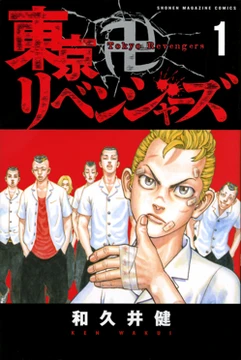
The Tenjiku Arc
Two brothers bound by a broken past become the sharpest blade between two rival gangs.

The Tenjiku Arc is a major story arc in the Tokyo Revengers manga that shifts the spotlight to the Tenjiku Alliance, a coalition of delinquent gangs operating out of the Shinjuku district. At its core, the arc peels back the layers on Mikey's past, revealing his deep and painful bond with Izana Kurokawa, the formidable leader of Tenjiku, and the tragic history that drove the two brothers apart. This arc serves as both a character study and a high-stakes gang confrontation. It forces the Toman members to reckon with a rival organization that is not merely a territorial threat but a personal one, as Izana's vendetta against Mikey threatens to tear apart everything Toman has built. The emotional weight of old loyalties, family secrets, and present-day enmity makes it one of the most narratively dense stretches in the series.
- Primary antagonist faction
- Tenjiku Alliance (Shinjuku-based gang coalition)
- Key rival leader
- Izana Kurokawa – Tenjiku leader
- Central mystery character
- Mikey – Toman founder, Izana's half-brother
- Notable Tenjiku member
- Kakucho – Izana's right-hand man
- Setting district
- Shinjuku, Tokyo
- Core theme
- Family bonds, betrayal, and the cost of revenge
Lore & Background
The Tenjiku Alliance is not a single gang but a loose coalition of delinquent crews that have carved out a foothold in the Shinjuku area, a district that sits just outside Toman's traditional territory in the Suginami and surrounding wards. Their structure is more fluid and less hierarchical than Toman's, which makes them harder to read and harder to intimidate. At the top of this loose hierarchy sits Izana Kurokawa, a man whose cold intelligence and ruthless ambition have made him a figure whispered about in delinquent circles. He does not lead through brute force alone; he leads through calculated manipulation and the loyalty he commands from those who share his grudge against Mikey and the Tokyo Manji Gang. The emotional engine of the Tenjiku Arc is the relationship between Izana and Mikey. Their bond as half-brothers was forged in a shared childhood trauma involving the death of their sister/half-sister Shinichiro and the abandonment by their parents. For years after that tragedy, they grew up separately, and the resentment Izana harbored toward Mikey festered into a desire for destruction. Izana never wavered in his belief that Mikey stole the life he deserved, and that unwavering bitterness is both the most tender and most dangerous thread in the arc. Kakucho's presence as Izana's most loyal lieutenant adds another layer of personal stakes for the Toman members. His journey from a childhood friend of Izana to a Tenjiku enforcer is not a simple defection; it is a story of shared pain, of finding purpose in a rival camp, and of carrying the weight of that loyalty into every subsequent confrontation. When Toman and Tenjiku clash, the fights are not abstract territorial disputes. They are old friends, former brothers, and childhood companions standing on opposite sides of a line that was drawn years ago in a place neither of them fully understands.
In Their Own Story
The rain had not stopped for three days. Shinjuku's backstreets glistened under the sodium-orange glow of streetlamps, and the air smelled of wet asphalt and cheap tobacco. Takashi stood at the edge of an alley, his Toman jacket slung over one arm, watching Baji walk toward him with that unhurried, almost bored gait. Baji's eyes found his immediately, the way they always had, as if no amount of years or distance could dull that particular recognition. Behind Baji, the Tenjiku crew fanned out in a loose half-circle, their silence louder than any threat. Takashi's jaw tightened. He could feel the weight of every Toman member watching from the cross-street, every one of them carrying a grudge or a question about the man who had worn their crest and then walked away. Baji stopped three meters out. He did not raise his fists. He simply looked at Takashi with an expression that was not anger, not even contempt, but something closer to patient grief, as if he were waiting for Takashi to be the one to say the words that would finally let them both stop pretending this was just another street fight. The rain filled the silence. Neither of them moved.
Reader's Guide
The arc opens by introducing the Tenjiku Alliance as a serious territorial and personal threat to Toman, operating out of Shinjuku with a structure and philosophy distinct from Toman's. Baji is established as the de facto leader, a man whose authority rests on personal loyalty and combat reputation rather than formal rank. The Tenjiku crew is shown to be cohesive and dangerous, not a ragtag collection but a group bound by shared experience. The narrative then pivots to Takashi's backstory. His connection to Baji is revealed to stretch back to a shared childhood trauma, and his time as a Toman member is reframed not as a casual affiliation but as a period of deep personal conflict. His departure from Toman is shown to be driven by a fear of bringing harm to the people around him, a fear that Baji's constant presence both validated and complicated. Kazutora's role becomes central as the arc progresses. His former membership in Toman makes every confrontation a personal reckoning, and his current position within Tenjiku forces Toman members to confront the reality that their own former brother is now fighting against them. The emotional stakes escalate as the arc moves toward a major clash between the two factions, where old bonds and new enmities collide on the street. The arc's impact on the broader story is significant. It deepens Takashi's characterization beyond the time-traveling protagonist role, gives Baji a narrative weight that rivals the main Toman leaders, and reframes Kazutora's journey as a cautionary thread about how easily a person can be pushed from one family into another. It also raises the question of whether the cycle of violence between these groups can ever be broken, or whether the bonds that hold them together are the same bonds that keep them fighting.
Did You Know?
- Izana Kurokawa is the half-brother of Mikey and the younger brother of Shinichiro Sano, making the Tenjiku conflict a deeply personal family feud.
- Unlike many arcs in Tokyo Revengers, the Tenjiku Arc does not involve time travel; it focuses entirely on the present-day consequences of past betrayals.
- Kazutora is absent from this arc as he is serving time in juvenile detention for his role in the Valhalla incident.
Frequently Asked Questions
What is the Tenjiku Arc in Tokyo Revengers?
The Tenjiku Arc is a major manga storyline that shifts the narrative spotlight to the Shinjuku-based Tenjiku gang and its leader Baji Keisuke. It functions as both a high-stakes rivalry with Toman and an in-depth look into Takashi Mitsuya's hidden past.
Who is Baji Keisuke and what role does he play?
Baji is the top leader of the Tenjiku gang and serves as the arc's primary antagonist. He is a fiercely capable fighter whose personal history with Takashi makes their eventual confrontation deeply personal rather than purely territorial.
What is Takashi Mitsuya's connection to Tenjiku?
Takashi was once a member of Toman but left the gang and fell under Baji's wing, driven by a childhood bond and shared trauma. His split loyalty becomes the emotional core of the arc, forcing him to choose between the family he abandoned and the one he built.
Why does the Tenjiku Arc matter to the larger Tokyo Revengers story?
It retroactively explains why Takashi disappeared from Toman's ranks and recontextualizes his earlier actions. It also establishes Tenjiku as a genuine rival power in Shinjuku, raising the stakes for every subsequent gang conflict.
What are the central themes of the Tenjiku Arc?
The arc circles around childhood friendship, the weight of loyalty, and the personal cost of walking away from a gang. It asks whether the bonds you form after leaving one organization can truly replace the ones you left behind.
More in Story & Timeline
Elsewhere in the Tokyo Revengers universe
Spotted an error? Know more?
This is a living reference — every entry is fact-audited, and reader corrections feed straight into our audit queue. Suggest an edit · See this site's audit record