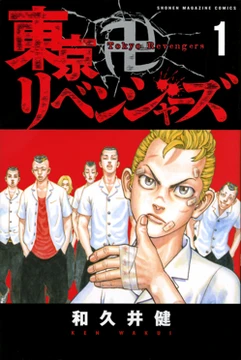
Nakano
Concrete, steel, and blood—Nakano is the ground Toman was built to bleed for.

Nakano is a ward in western Tokyo that serves as the beating heart of the Tokyo Revengers story. It is the home territory of the Tokyo Manji Gang (Toman), the primary setting where their daily lives, rivalries, and battles unfold across residential backstreets, commercial strips, and the platforms of Nakano Station. For the characters who call themselves Toman, Nakano is not merely a backdrop—it is the ground they protect, the concrete and steel that defines their identity as yanki.
In the real world, Nakano is a dense, layered Tokyo ward mixing apartment blocks, small businesses, and transit hubs. The series draws on that texture to build a lived-in, grounded stage where teenage gang culture feels immediate and visceral rather than stylized. Every corner of Nakano in the story carries the weight of loyalty, loss, and the constant threat of the next fight.
- Type
- Ward (ku) in western Tokyo, Japan
- Role
- Primary story setting; Toman home territory
- Affiliation
- Tokyo Manji Gang (Toman) base of operations
- Era
- 2000s (the story's time period)
- Key landmark
- Nakano Station area (frequent gathering and conflict spot)
- Narrative function
- Central stage for Toman's internal drama and external rivalries
Lore & Background
In the world of Tokyo Revengers, Nakano functions as the gravitational center of the yanki world. Toman's headquarters sits within the ward, and the gang's members move through its streets as if walking through their own living room. The area's mix of narrow shopping alleys, wide arterial roads, and the constant hum of the train line gives the story a sense of claustrophobic intimacy: there is nowhere to truly hide, and every rival gang operating in neighboring wards is one train ride away.
The ward's identity in the story is inseparable from the people who claim it. Toman's code of loyalty, their emphasis on protecting members and their families, is enacted on Nakano's streets. Fights break out near the station, negotiations happen in the shadows of laundromats and convenience stores, and the quiet moments—sharing onigiri on a bench, a late-night walk home after a brawl—give the territory a warmth that contrasts sharply with the violence. Nakano is where the characters are most themselves, and its loss or threat to its integrity is what makes the story's stakes feel personal.
The 2000s setting grounds Nakano in a specific cultural moment: flip phones, a particular fashion of baggy jeans and cropped jackets, a Tokyo that still carried the roughness of the post-bubble era in its smaller wards. This era-specific texture makes the place feel both nostalgic and urgent, a world that was real and is now gone, which deepens the bittersweet tone the series carries throughout.
In Their Own Story
The fluorescent lights of Nakano Station flickered at 11 p.m., casting a sickly yellow glow over the tiled walls. Takemichi leaned against a pillar, still in his school uniform, watching the last local train pull into the platform with a groan of brakes. Across the tracks, the silhouette of a man in a long coat stood perfectly still, counting the seconds until the doors opened. The smell of wet asphalt and cheap ramen drifted from the food court above. Somewhere three streets back, in a narrow alley between a shuttered pachinko parlor and a 24-hour pharmacy, the sound of a fist meeting a jaw echoed off the brick. Takemichi didn't turn. He'd heard enough of those sounds in Nakano to know which one was his friend and which one was a stranger. He pulled his collar up, stepped onto the platform, and let the train carry him home. The ward hummed around him, indifferent and eternal, holding every fight and every forgiveness in its concrete bones.
Reader's Guide
Nakano in Tokyo Revengers is a dense, lived-in Tokyo ward rendered through the lens of teenage gang life in the 2000s. Think narrow commercial streets lined with shuttered convenience stores, laundromats, and tiny eateries; wide train platforms where the last local drags in under buzzing fluorescent tubes; and the back alleys where a fistfight can erupt over a look. The architecture is functional, slightly worn, nothing grand—this is a working-class ward, and the story treats it that way.
Toman claims Nakano as its home ground. Their headquarters sits within the ward, and the gang's members treat its streets as an extension of their own bodies: you don't let outsiders trash your block, you don't let a rival gang set up shop on your corner. The territory system in the story is lived, not bureaucratic. A yanki in Nakano knows which alley belongs to which crew, which station platform is neutral ground, and which storefront is off-limits after dark. Loyalty to the territory and to the people in it is the first and most sacred rule.
What makes Nakano matter to the characters is that it is where they are most vulnerable and most themselves. The fights here are not abstract; they are about protecting the specific bench, the specific shop, the specific person standing three meters away. When Nakano is threatened—by a rival gang, by a betrayal from within, by the simple erosion of time—the characters feel it in their chest before they feel it in their fists. The ward is not a map. It is a promise.
Did You Know?
- Nakano is a real ward in western Tokyo, and the series uses its actual geography—train lines, station names, and the general urban texture of the area—as the story's stage.
- Toman's headquarters and the majority of the series' key confrontations take place within or immediately around the Nakano area, making it the narrative's gravitational center.
- The 2000s time period of the story means Nakano is depicted in a specific cultural snapshot: flip phones, a particular yanki fashion, and a Tokyo that still carried the rough, post-bubble energy of smaller wards.
- The ward's mix of dense residential blocks and commercial strips creates the story's signature claustrophobia—characters can't outrun their problems in Nakano, because every street loops back to the next one.
More in World & Setting
Elsewhere in the Tokyo Revengers universe
Spotted an error? Know more?
This is a living reference — every entry is fact-audited, and reader corrections feed straight into our audit queue. Suggest an edit · See this site's audit record