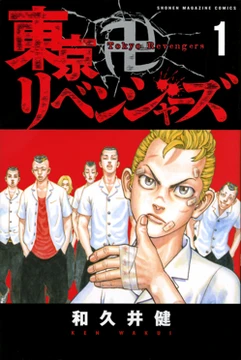
The Hinata Incident
A bond of obsession, a web of betrayal, and a tragedy that cuts deeper than any blade.

The Hinata Incident is one of the most emotionally devastating set-pieces in Tokyo Revengers, centering on the tragic death of Hinata Tachibana, orchestrated indirectly by Kisaki Tetta. It crystallizes the series' recurring theme that the bonds holding a gang together can become the very thing that destroys its members. The incident functions as a turning point for several characters and leaves a lasting scar on the Toman hierarchy. In the broader narrative, Kisaki represents a cold, calculating antagonist whose obsession with Hina drives him to commit the ultimate act of cruelty—ordering her death from the shadows. His fate becomes a lens through which the story examines loyalty, helplessness, and the cost of belonging to a world that glorifies strength while hiding its cruelty.
- Kazutora Hanemiya
- Violent, unstable former member of Toman; accidental killer of Shinichiro Sano
- Takashi Mitsuya
- Gentle, self-sacrificing member of Toman; no relation to Kazutora
- Affiliation
- Tokyo Manji Gang (Toman) — Kisaki was a manipulative outsider who infiltrated and betrayed the gang, forming his own groups
- Narrative role
- Pivotal emotional turning point; examines guilt, loyalty, and the cost of violence
- Thematic core
- The destructive potential of misplaced loyalty and unresolved trauma within a delinquent gang
Lore & Background
Kisaki Tetta occupies a singular place in Toman's history, but not as a loyal member—he was a manipulative outsider who infiltrated the gang and later betrayed it, forming his own groups. He is feared for his cold, calculating intelligence; he can shift from calm to murderous in an instant, and those around him walk a careful line. His dynamic with Mikey is one of constant, exhausted tension: Kisaki idolizes Hina while being haunted by the fact that he ordered her death out of twisted obsession. The rest of Toman watches this with a mixture of pity and wariness, because Kisaki's loyalty is a facade—his violence is not. The incident itself erupts from the pressure of that obsession reaching a breaking point. Kisaki's cruelty, which has been a managed hazard for those around him, finally turns outward—toward the one person he is most bound to and the one person who has never flinched from him: Hinata Tachibana. The tragedy is not that Kisaki is irredeemable; it is that his obsession, his refusal to accept rejection, and his inability to escape the past made him a ticking time bomb. In the aftermath, the gang is forced to reckon with what it means to call someone family while being unable to protect them from each other. For characters like Takemichi and the wider Toman leadership, the incident shakes a quiet assumption: that the gang's code of brotherhood is a shield. The story of Kisaki proves it can also be a cage, and that the people inside it may be the ones most likely to hurt the people they love most.
In Their Own Story
The alley behind the old arcade still smells of rain and cheap tobacco. Takashi kneels in the wet pavement, pressing a torn sleeve against the gash on Kazutora's forearm, murmuring the same three words he always uses—*it's okay, it's okay, it's okay*—as if repetition could stitch the world back together. Around them, the neon of the shopping street bleeds pink and blue across the puddles. Somewhere a vending machine hums. Kazutora's breathing is ragged, his eyes unfocused, and Takashi does not look up. He will not look up. He has learned, over years of small bloodstains on the kitchen tile, that looking up means acknowledging the thing he cannot fix, and he is not ready for that. He is never ready. The gang members who gathered at the alley's mouth stand in a loose, uneasy semicircle, hands in pockets, jaws tight, waiting for the storm in the older brother to pass the way it always does. This time, Takashi's fingers are trembling in a way they never have before, and the rain is getting colder, and the three words are starting to sound less like a lullaby and more like a prayer he is not sure anyone is listening to.
Reader's Guide
The incident builds over the course of the arc in which the Hinata brothers are featured most prominently. Early scenes establish the familiar rhythm: Kazutora's outbursts, Takashi's quiet cleanup, the rest of Toman keeping a respectful distance. Tension escalates as external pressures—rival gang conflicts, internal Toman politics, and the brothers' own deteriorating dynamic—compress the space between them. The turning point arrives when Kazutora's violence, previously directed outward at enemies or strangers, redirects toward Takashi. The confrontation is intimate, brutal, and brief. Takashi does not fight back; his response is the same one he has always offered—presence, patience, an open hand. It is not enough. The aftermath is a silent, stunned stillness among the Toman members who witness it, followed by the slow, heavy process of dealing with the consequences. The impact ripples outward. Characters who had taken the Hinata brothers for granted—background fixtures of the gang—must now sit with what they saw. The incident reframes Toman's mythology: brotherhood is not a guarantee of safety. It is a promise that can be broken by the very people who made it. For the remainder of the series, the memory of that moment colors every interaction between the surviving members, a quiet reminder that the gentlest people in the room are often the first to be lost.
Did You Know?
- Kisaki's defining trait throughout the series is his inability to escape his obsession with Hinata Tachibana, which fuels his coldness and eventual ordering of her death—he did not kill her personally, but orchestrated i
- Kisaki was never a loyal member of Toman; he was a manipulative outsider who infiltrated and betrayed the gang, forming his own groups—his instability exists alongside his calculated scheming, not loyalty.
- The incident is framed less as a battle or a fight scene and more as a quiet, domestic tragedy played out in front of an audience that cannot intervene.
Publication & Commercial Milestones
Ken Wakui's Tokyo Revengers ran in Kodansha's Weekly Shōnen Magazine from March 2017 through November 2022, spanning 278 chapters that were eventually compiled into 31 tankōbon volumes between May 2017 and January 2023. The series quickly became a commercial juggernaut, surpassing 80 million copies in circulation by mid-2024 and cementing its place among the best-selling manga of all time. Critical recognition followed as well: in 2020, the work took home the 44th Kodansha Manga Award in the shōnen category, validating its appeal well beyond raw sales figures. The manga's international footprint also grew steadily, with Kodansha USA launching a digital release in North America in 2018 and Seven Seas Entertainment taking on further localization efforts. For a shōnen title centered on gang violence and time travel, the combination of sustained weekly serialization, award prestige, and global distribution underscores how deeply the story resonated with readers across multiple markets and generations.
The Premise & Time-Travel Rules
The story's engine is deceptively simple yet devastating in its emotional stakes. Takemichi Hanagaki, a 26-year-old part-time worker mired in a bleak existence, is shattered when he learns that his former girlfriend Hinata Tachibana and her younger brother Naoto were killed in a dispute tied to the Tokyo Manji Gang. The following day, an anonymous assailant shoves him onto a subway track. In the split second before the train strikes him, Takemichi is flung twelve years backward into 2005, the year he was still dating Hinata. Vowing to undo her death, he throws himself into altering the past. The mechanism governing his leaps is later identified by Naoto: physical contact between the two of them is what triggers the temporal jump. This rule becomes a critical narrative constraint, because as the story progresses and Naoto's availability shifts, Takemichi's ability to travel is threatened, forcing him to find increasingly desperate alternatives to reach the people he needs to save.
Anime & Live-Action Adaptations
Tokyo Revengers found a second life on screen through multiple adaptation routes. Liden Films helmed the anime television series, with the first season broadcasting from April through September 2021. A second season followed from January to April 2023, and a third ran from October to December 2023. A fourth season is scheduled to debut in October 2026, indicating the franchise's continued momentum in animated form. On the live-action front, a theatrical film hit Japanese cinemas in July 2021, and its two-part sequel arrived in April and June 2023. The parallel development of anime and film adaptations gave audiences two distinct visual interpretations of the same gang-warfare and time-travel narrative. The staggered release schedule—spanning nearly five years from the first anime season to the planned fourth—suggests a deliberate pacing strategy, allowing each adaptation to build on the previous one while keeping the broader audience engaged across multiple platforms and formats.
Narrative Arc & Thematic Core
Across its many arcs, the manga structures its conflict around a single tragic root: the death of Shinichiro, Mikey's older brother, which poisons every relationship within the Tokyo Manji Gang. Takemichi's repeated leaps expose how that loss cascades outward—Kazutora's violence, Kisaki's manipulation, the Bloody Halloween battle of October 31, 2005, the Black Dragons' dissolution, and ultimately the Kanto Incident that fractures Mikey into the ruthless leader of Bonten. Each return to the present reveals a new, darker timeline, forcing Takemichi to dig deeper into the past. The climax demands he and Mikey leap together to 1998, where they jointly rebuild the gang, ensure Shinichiro survives, and rescue Baji, Draken, Emma, and Izana. Kisaki is drawn into friendship rather than met with destruction, and the Shiba siblings' feud is resolved. By 2008, Mikey peacefully disbands the organization, and eleven years later Takemichi and Hinata stand at their wedding, surrounded by the very friends whose fates he spent the entire series trying to protect.
Frequently Asked Questions
What is The Hinata Incident in Tokyo Revengers?
It's the arc built around Takashi and Kazutora Hinata, two brothers who both ride with the Tokyo Manji Gang. The sequence is widely regarded as one of the most gut-wrenching stretches in the manga, turning their love for each other into the source of their undoing.
Who are the Hinata brothers?
Takashi is the younger of the two, a soft-spoken rider who consistently puts others before himself, while Kazutora is the older brother whose rage and unpredictability make him a constant danger to everyone nearby. Their stark contrast in temperament is what makes their shared story so painful to follow.
What actually happens in The Hinata Incident?
Kazutora's mental state deteriorates to the point where he becomes a threat, and Takashi throws himself into trying to shield both his brother and the gang from the fallout. The confrontation ends in tragedy, forcing the people around them to watch helplessly as a bond they trusted turns lethal.
Why does The Hinata Incident matter to the overall plot?
It acts as a structural pivot, reshaping trust and hierarchy within Toman and pushing several characters to reconsider what their loyalty to the gang truly costs. The emotional aftermath of the brothers' fate echoes through later arcs and colors how characters handle conflict.
What theme does The Hinata Incident explore?
At its core, the incident examines how the affection between two people inside a delinquent organization can become a weapon pointed at both of them. The Hinata brothers embody the idea that the tighter a group's bonds, the more violently those same bonds can snap.
More in Story & Timeline
Elsewhere in the Tokyo Revengers universe
Spotted an error? Know more?
This is a living reference — every entry is fact-audited, and reader corrections feed straight into our audit queue. Suggest an edit · See this site's audit record