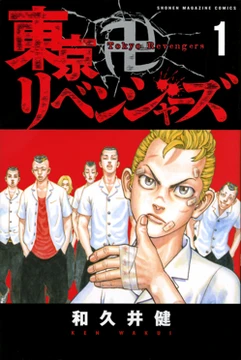
The Toman Civil War
When the brotherhood turns its blades inward, no rival gang could have hurt Toman more.

The Toman Civil War is one of the most devastating internal conflicts in the Tokyo Revengers saga, pitting members of the Tokyo Manji Gang against one another in a struggle over the gang's soul, leadership, and survival. Rather than an external rival gang, the enemy is the very brotherhood that built Toman's name, making the fighting all the more brutal and personal. This event sits at the heart of the series' emotional core: the question of whether a group bound by loyalty and shared pain can survive when its own leader fractures into two irreconcilable halves. For Takemichi, who keeps leaping through time trying to save everyone, the civil war represents the moment where saving one person might cost the whole gang.
- Affiliation
- Tokyo Manji Gang (Toman)
- Setting
- Tokyo, Japan
- Type
- Internal gang conflict / civil war
- Key figures
- Mikey, Draken, and Toman's division captains
- Narrative role
- Central turning point exposing Toman's fractures
- Thematic focus
- Loyalty vs. identity, the cost of a broken leader
Lore & Background
Toman was built on a simple, almost naive creed: protect the weak, ride together, and never abandon a brother. For years that code held, even as the gang grew, fractured by rivalries, and bled members to rival organizations. But the civil war shatters that mythology. At its center is Mikey, whose psyche splits under accumulated trauma into a charismatic, gentle president and a cold, calculating "black" persona who views the gang as a tool rather than a family. Draken, who has stood at Mikey's right hand since they were children, finds himself choosing between the friend he swore to protect and the person that friend has become. The war is not a single battle but a slow unraveling. Captains and lieutenants pick sides. Riders who once shared cigarette breaks and late-night ramen now find themselves on opposite ends of a street, knuckles raised against each other. The gang's territory in Tokyo becomes a patchwork of loyalties, and the very name "Toman" becomes a banner that different factions wave to mean different things. For the lower-ranking members caught in the middle, the civil war is less about ideology and more about the terrifying question: which of the people I call brothers will try to break my jaw first? What makes the conflict resonate beyond typical gang violence is its intimacy. There are no outside enemies to rally against. Every argument is personal, every betrayal is a memory of a shared moment now poisoned. The civil war forces Toman to confront what it actually is when the myth is stripped away, and the scars it leaves reshape the gang's identity for the rest of the story.
In Their Own Story
The rain had been falling for three hours when Baji finally stopped pretending he wasn't shaking. He stood at the edge of the lot where Toman's bikes were parked, the wet asphalt reflecting the sodium streetlights in long orange streaks. Across the way, a line of riders in the same black jackets, the same wolf-and-flame crest on their backs, waited in silence. Same gang. Same name. But the way they held their fists told him they were ready to break him. He could hear Draken's voice somewhere behind him, low and strained, calling his name like a prayer. And further back, barely a whisper, Mikey. Or what Mikey had become. The one who looked at the lot, at the bikes, at all of them, and saw numbers on a spreadsheet. Baji spat the rain from his lip. He didn't know which side he was on anymore. He only knew that if he swung first, he'd be the one they all hated. And if he didn't, he'd be the one they all buried.
Reader's Guide
The civil war builds over a long stretch of the story rather than erupting in a single night. Mikey's "black" state intensifies, and his decisions begin to fracture the gang's unity. Draken, as vice-president, tries to hold the line, but the distance between him and Mikey grows with every order that feels less like leadership and more like control. Division captains and lieutenants are forced to choose. Some stay loyal to the name Toman regardless of who wears the president's jacket; others follow Mikey's darker instincts; still others simply want to protect the younger riders caught in the crossfire. The conflict escalates from verbal clashes and territorial disputes to outright physical confrontations between members who were, until weeks earlier, sharing meals and covering each other's shifts. Takemichi, leaping through time, finds that this is the one thread he cannot easily pull. Changing one variable risks cascading consequences that could destroy the gang entirely. The emotional weight of the arc falls on the riders themselves: the choice between the person you loved and the person they are, the cost of loyalty when loyalty is directed at a ghost, and the terrifying possibility that the brotherhood was always more fragile than the myth suggested. The aftermath reshapes Toman's structure, its leadership, and the trust between its members. Some bonds are broken permanently. Others are forged in the fire of having survived the worst fight of their lives. The gang that emerges is smaller, scarred, and fundamentally changed — a Toman that has looked into its own mirror and decided, barely, to keep going.
Did You Know?
- Mikey's "black" state is not simply anger; it is a separate, coldly strategic persona that views the gang as an instrument, which is what makes the internal conflict so psychologically layered rather than a simple power
- Draken's role as vice-president places him in the agonizing position of being Mikey's closest friend and, during the civil war, potentially his most direct opponent — a dynamic the story leans into for maximum emotional
- The civil war's impact is not limited to the top leadership; lower-ranking riders and newer members are caught in the crossfire, highlighting how an internal power struggle at the top ripples down through every level of
- Takemichi's time-leap mechanic means the civil war is not a single fixed event but a thread he can observe, partially alter, and ultimately must accept — making it one of the most emotionally taxing arcs for the protagon
More in Story & Timeline
Elsewhere in the Tokyo Revengers universe
Spotted an error? Know more?
This is a living reference — every entry is fact-audited, and reader corrections feed straight into our audit queue. Suggest an edit · See this site's audit record