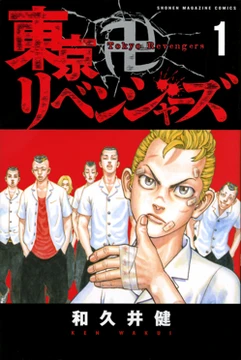
Kichijoji
One station, one gang, one brotherhood that refuses to stay buried.

Kichijoji is the station-area district in Musashino, western Tokyo, that serves as the home turf and primary operating ground of the Tokyo Manji Gang (Toman). In the world of Tokyo Revengers, it is the beating heart of the story's delinquent ecosystem: the place where schoolboys in black gakuran gather after class, where rival gangs test their boundaries, and where the fragile brotherhood of Toman is forged, strained, and tested.
Though the gang's name boasts 'Tokyo,' their actual domain is this one bustling commercial strip and its surrounding blocks. Kichijoji is where Takemichi Arahashi first stumbles into the yanki world, where Mikey and his crew carve out their identity, and where much of the series' most visceral confrontations unfold against the backdrop of neon shop signs, vending machines, and the rumble of passing trains.
- Location
- Musashino, Tokyo (station-area district)
- Primary faction
- Tokyo Manji Gang (Toman)
- Role in story
- Toman's home territory; site of key confrontations and gang gatherings
- First featured
- Early in the manga and anime (Season 1)
- Atmosphere
- Working-class commercial strip; yanki hotspot after school hours
- Cultural context
- Real Tokyo district repurposed as a delinquent-gang turf
Lore & Background
In the Tokyo Revengers universe, Kichijoji is not merely a backdrop; it is the gravitational center around which Toman orbits. The gang's name—Tokyo Manji—carries an almost defiant exaggeration, as if claiming the entire metropolis when their true kingdom is the stretch of shops, underpasses, and park benches radiating from the station. This gap between name and reality is itself a character trait of the group: young, loud, and hungry for a world that has not yet made room for them.
The district's commercial character matters to the story. Kichijoji is a neighborhood of small eateries, arcades, and local businesses rather than corporate towers. That intimacy means every scuffle, every shouted challenge, every bloodied knuckle is witnessed by shopkeepers and passersby. The yanki culture here is not the romanticized violence of a film; it is the daily reality of boys who have nowhere else to go after the final bell, and whose only sense of belonging is the pack that stands beside them on the platform.
As the narrative deepens, Kichijoji becomes a stage for the gang's internal fractures as much as its external battles. The same benches where Mikey once laughed with his crew become the ground where betrayals land, where alliances shift, and where the cost of 'yanki life' is measured not in territory gained but in friends lost. The station's constant arrival and departure of trains mirrors the story's time-travel motif: people keep coming back, keep changing, keep trying to save what they cannot hold.
In Their Own Story
The last train had just hissed into Kichijoji, its doors exhaling a breath of warm air over the platform. Takemichi stood at the far end, hands in his pockets, watching the gang's silhouettes scatter toward the shops like a school of fish dispersing from a stone. The vending machines hummed their low, electric hymn. Somewhere past the convenience store, a voice called out—half-laugh, half-roar—and the night swallowed it whole. He pulled his collar up. The air smelled of exhaust, fried rice, and the faint metallic tang of old blood on a curb no one had bothered to clean. Kichijoji did not care who won or lost. It only kept its hours, kept its lights on, kept the platform empty and waiting for whoever came next.
Reader's Guide
Kichijoji, as the story presents it, is a compact commercial district built around a JR station in Musashino. Think low-rise shops, narrow back alleys, a small park, and the broad pedestrian plaza that stretches from the station exit. After school hours, the area transforms: groups of delinquents in matching black uniforms cluster near the vending machines, lean on lampposts, or occupy the concrete benches facing the road. The 'territory' is not a fenced zone; it is a social claim. Toman's presence is marked by who sits where, who greets whom, and whose name is called across the street with respect or contempt.
The rules the characters live by are simple and brutal. You do not enter Kichijoji on Toman's turf without knowing your place. Rival gangs—Bonten, later the more organized threats—test boundaries through challenges issued on the platform or in the side streets. The gang's hierarchy is enforced not by written law but by who can stand, who bleeds, and who still shows up the next day. Mikey's word carries weight here not because of rank but because every member in this district chose, in some moment, to follow him.
For Takemichi, Kichijoji is the wound he keeps returning to. Every time-travel loop drops him back onto these same streets, and the familiarity is both comfort and cruelty. The district does not reset; the people do. That tension—static geography against shifting loyalties—is what makes Kichijoji the emotional anchor of the entire series.
Did You Know?
- The gang's name 'Tokyo Manji' is a deliberate overclaim: their actual turf is the Kichijoji station area in Musashino, not the whole of Tokyo—a classic yanki-gang naming convention of inflating local pride.
- Kichijoji's commercial, small-shop character (eateries, arcades, local businesses) is what makes the gang's daily life feel grounded and working-class rather than glamorous, reinforcing the 'ordinary boys in an extraordi
- The station's constant cycle of trains arriving and departing functions as a thematic echo of the time-travel mechanic: the place is fixed, but the people who pass through it keep changing.
- Many of Toman's most formative confrontations with rival gangs take place within walking distance of the station, making Kichijoji effectively the 'main stage' for the series' early arcs.
More in World & Setting
Elsewhere in the Tokyo Revengers universe
Spotted an error? Know more?
This is a living reference — every entry is fact-audited, and reader corrections feed straight into our audit queue. Suggest an edit · See this site's audit record